Jill Barber at the Palomar
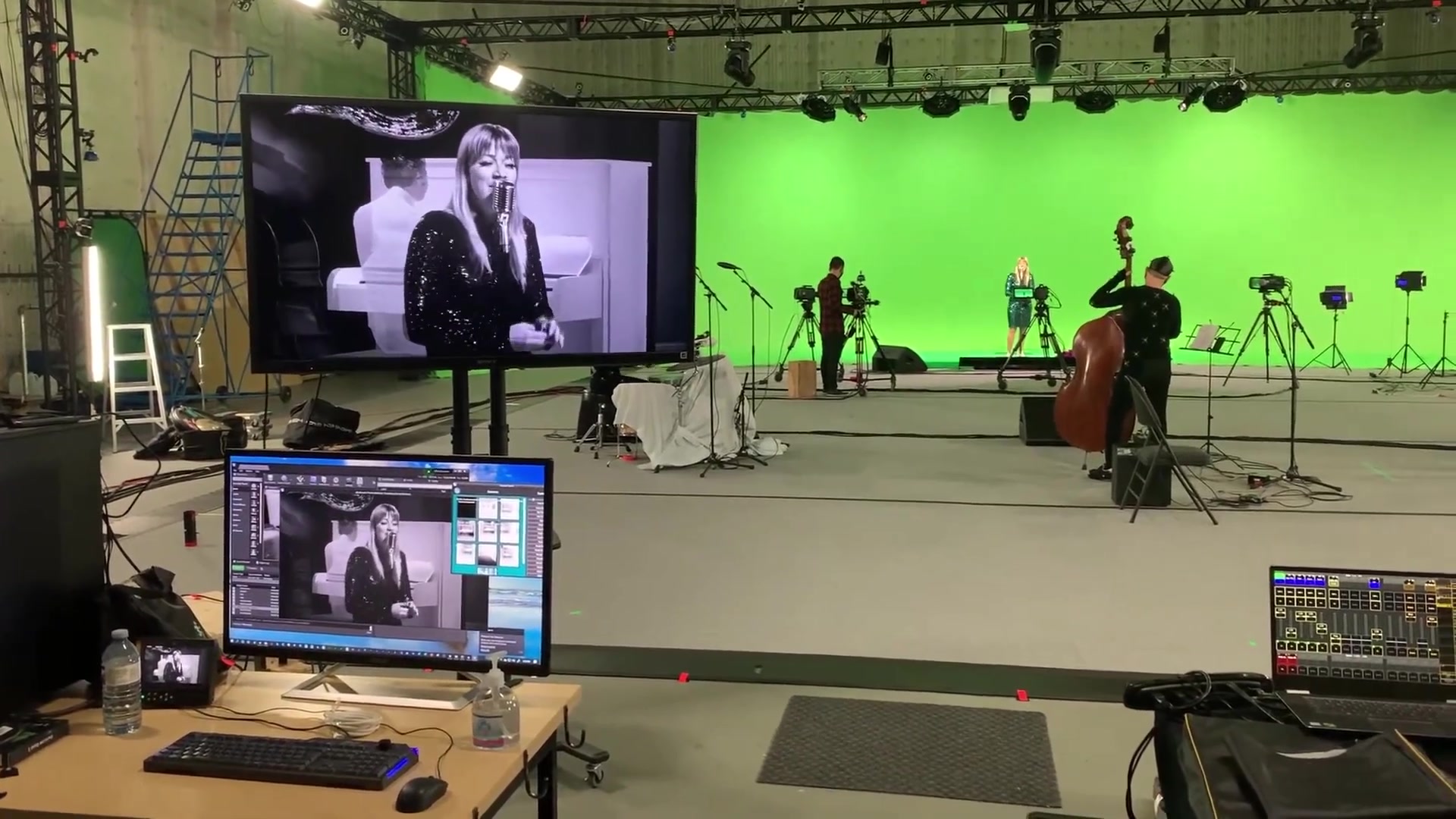
A live-streamed virtual concert with Live Nation Canada that resurrected Vancouver's Palomar Supper Club, 65 years after its demolition — singer Jill Barber performing live on green screen while her real jazz band, wired up in motion-capture suits, appeared on-screen as ghostly figures behind her.
What it is
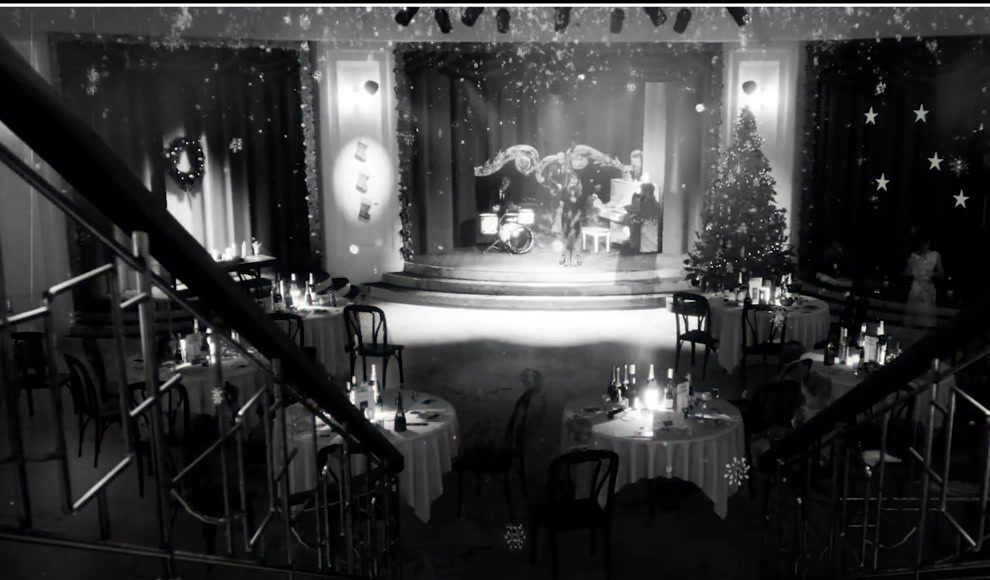
A series of live-streamed virtual concerts that resurrected Vancouver’s Palomar Supper Club — a historic art deco venue that stood at Burrard & Georgia from 1937 until its demolition in 1955 — headlined by a Christmas Special. Singer Jill Barber performed live on a green-screen stage with real-time camera tracking matching her physical camera to the virtual one, so the composite read as if she was inside the venue rather than overlaid on top of it. Her real jazz band — wired up in motion-capture suits — appeared on-screen as ghostly “Phantom Jazz Band” figures behind her, with a featured live-mocap dancing couple moving through the room. The rest of the venue was populated with virtual patrons at candle-lit tables driven by prerecorded mocap clips, plus period winter decor (wreaths, a Christmas tree on stage) and snow drifting through the room. Vancouver historian and CBC reporter Aaron Chapman stepped in mid-show to interview Jill on-camera and give the audience the venue’s back story.
I was Technical Artist at Lifelike & Believable: NPC state machines for the ~50 virtual patrons + the live clap trigger, a bartender state machine for the CBC interview, ghost particle FX for the Phantom Jazz Band, cloth + hair simulations across the cast, skinning polish, and the snow particle FX for the Christmas Special.
The first show premiered November 20, 2020 as a Live Nation Canada + Shocap Entertainment production; the Christmas Special and other Palomar XR performances followed in the same series. Funding support from Epic MegaGrants, Canada Media Fund, and Creative BC.
In short: a long-demolished 1940s Vancouver supper club, brought back for one night by a real singer + a ghost band + a virtual audience, all stitched together live.
What I built
NPC audience state machines + clap key-trigger. ~50 virtual patrons populated the venue (seated at candle-lit tables and standing at the bar), each driven by an Animation Blueprint state machine wired to a Behavior Tree that sequenced pre-recorded mocap clips — listening, applauding, eating, chatting — so the room read as a populated audience, not a synchronised chorus. (The Phantom Jazz Band and the featured dancing couple were on live mocap; the rest came from this prerecorded library.) The applause was the trickiest piece: at the end of every song the director called for the room to clap, and the operator hit a single keyboard key at the brain bar to fire the clap state across every NPC. Each one independently rolled whether to clap seated or stand up first, with a randomised start offset so the room never began clapping in perfect unison.
The audience state machine architecture and the clap trigger in detail
Each NPC’s behaviour was driven by an Unreal Animation Blueprint state machine (Idle, Listening, Eating, Chatting, Applause) sitting under a Behavior Tree that selected which state to enter and how long to stay in it. Transitions between Idle/Listening/Eating/Chatting were timed independently per NPC using offset randomisation so neighbouring patrons didn’t drift into perfect sync.
The clap key-trigger broadcast a single event to every patron. On receipt each NPC rolled two independent random values: a coin-flip for seated vs standing applause, and a small timing offset before kicking off the clap animation. The combined randomisation made the room sound and look organic — a wave of applause starting from a few seats, building, then settling — without any per-NPC manual scripting.
The same NPC state-machine + clap-trigger system carried across every Palomar show in the series — the audience animations and the wiring were authored once and reused across the November 20 premiere, the Christmas Special, and the rest of the playlist.
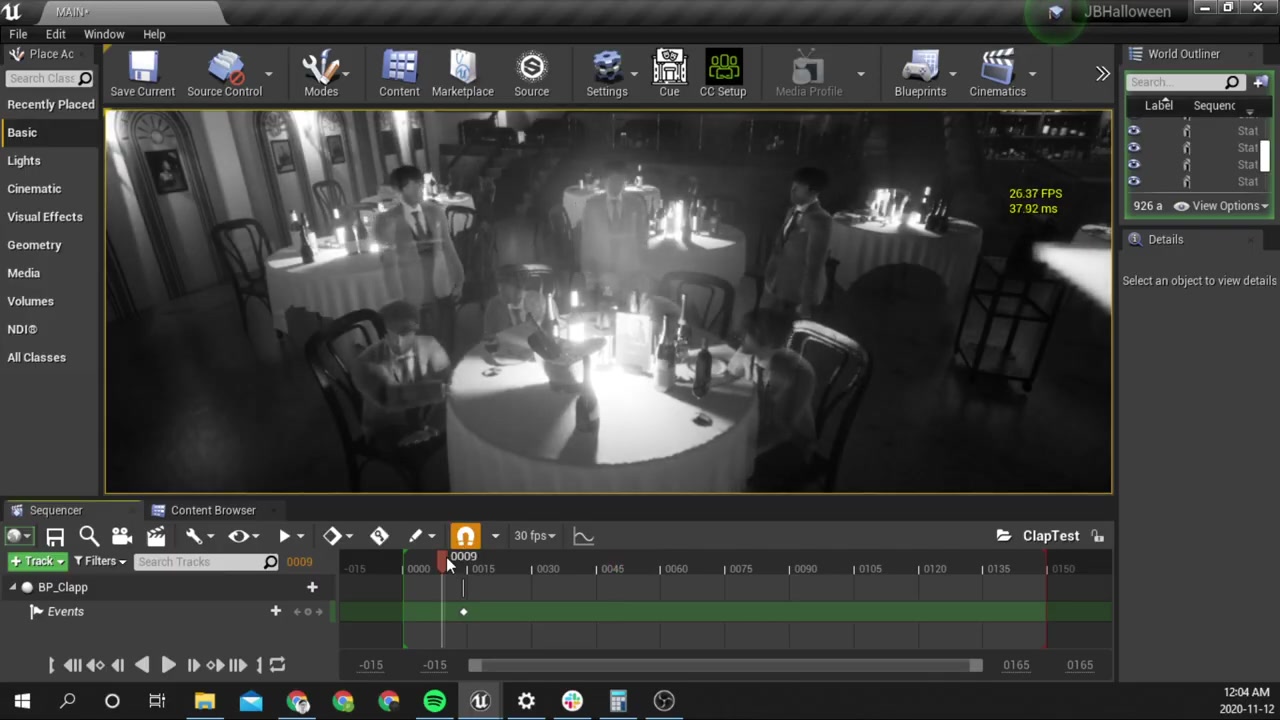
Bartender state machine for the November 20 interview. Mid-show during the premiere, CBC reporter Aaron Chapman stepped on-camera to interview Jill and give the audience the Palomar’s history (covered in this CBC News piece). The room needed to stay alive without competing with the foreground conversation, so I built a dedicated bartender state machine that ran continuously behind it — pouring drinks, wiping glasses, restocking the back bar — at a low enough visual intensity that the eye stayed on the interview but the room never read as empty.
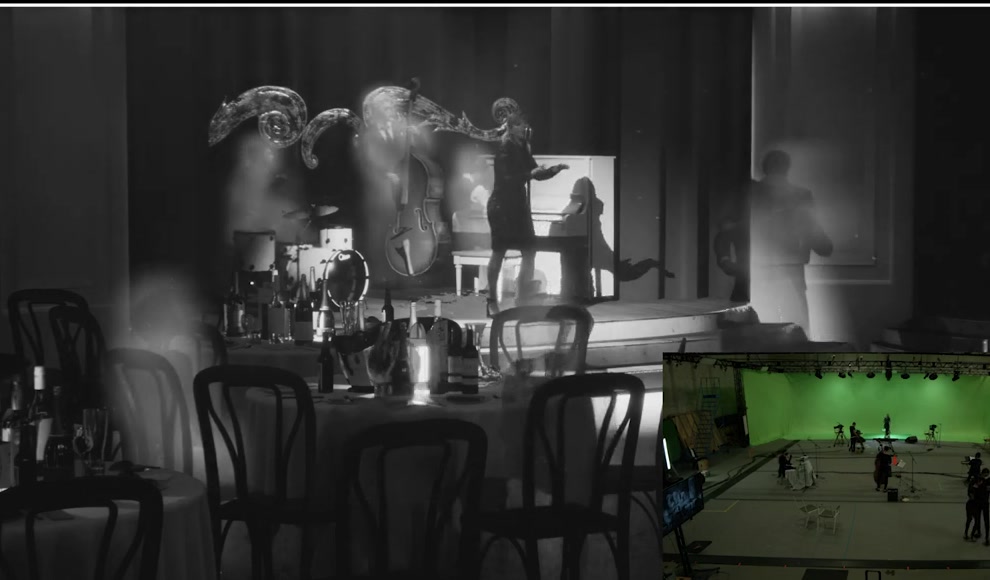
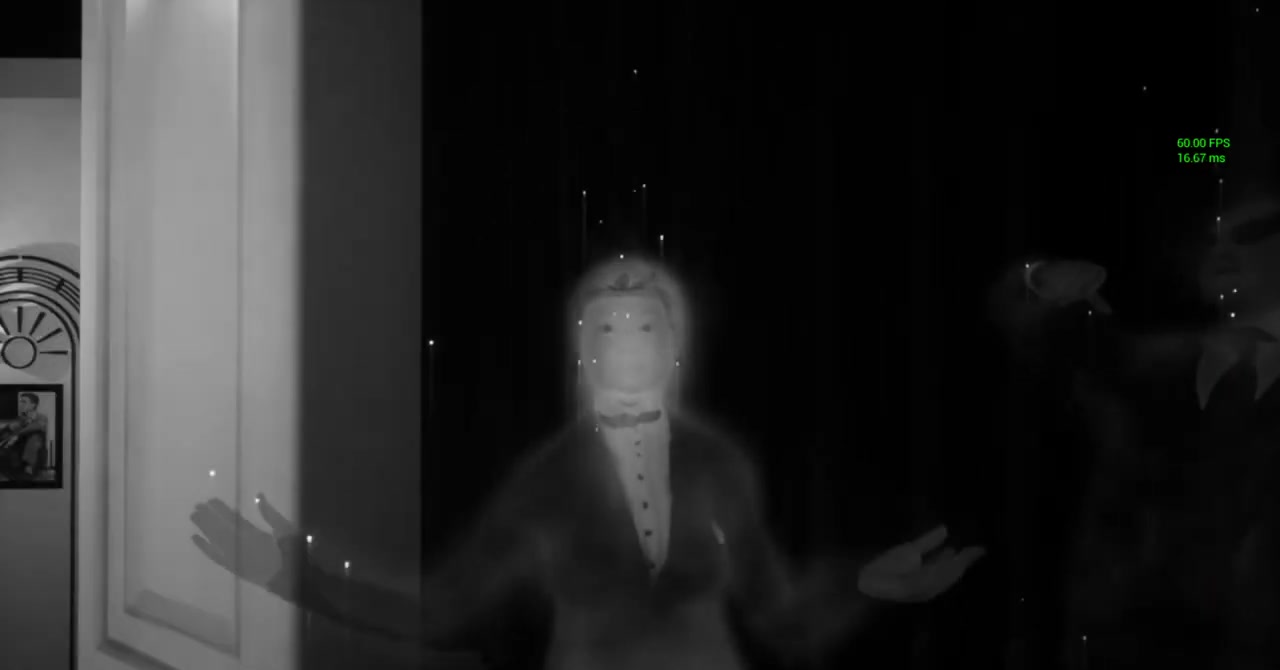
Ghost particle FX for the Phantom Jazz Band. Jill stayed real on green screen; her band members wore mocap suits and appeared on-screen as ghostly figures behind her — the “Phantom” of the show’s title. I built a Niagara particle system that wrapped each band member’s silhouette in a soft luminous mist scaling with their motion: louder, faster movements pushed more pronounced wisps and trails; quieter moments settled into a gentle glow. A scalar intensity parameter on each emitter let the director dial the ghostly amount up or down per scene.
The Niagara ghost VFX in detail
The ghost effect was built on Niagara, Unreal’s particle system. Each band member had a per-character emitter that sampled the skeletal mesh’s surface and spawned soft luminous particles tracking the mocap. Spawn rate, particle size, and trail length were all driven by the character’s per-frame velocity, so a still pose produced a quiet halo while a vigorous trombone slide produced a thicker, longer trail of phantom motion.
A scalar intensity parameter exposed on each emitter let the director adjust the overall ghost density per scene without re-publishing the asset. During the show this was driven from a Sequencer track so the band could fade slightly more solid for the verses and ghostlier for the instrumental breaks.
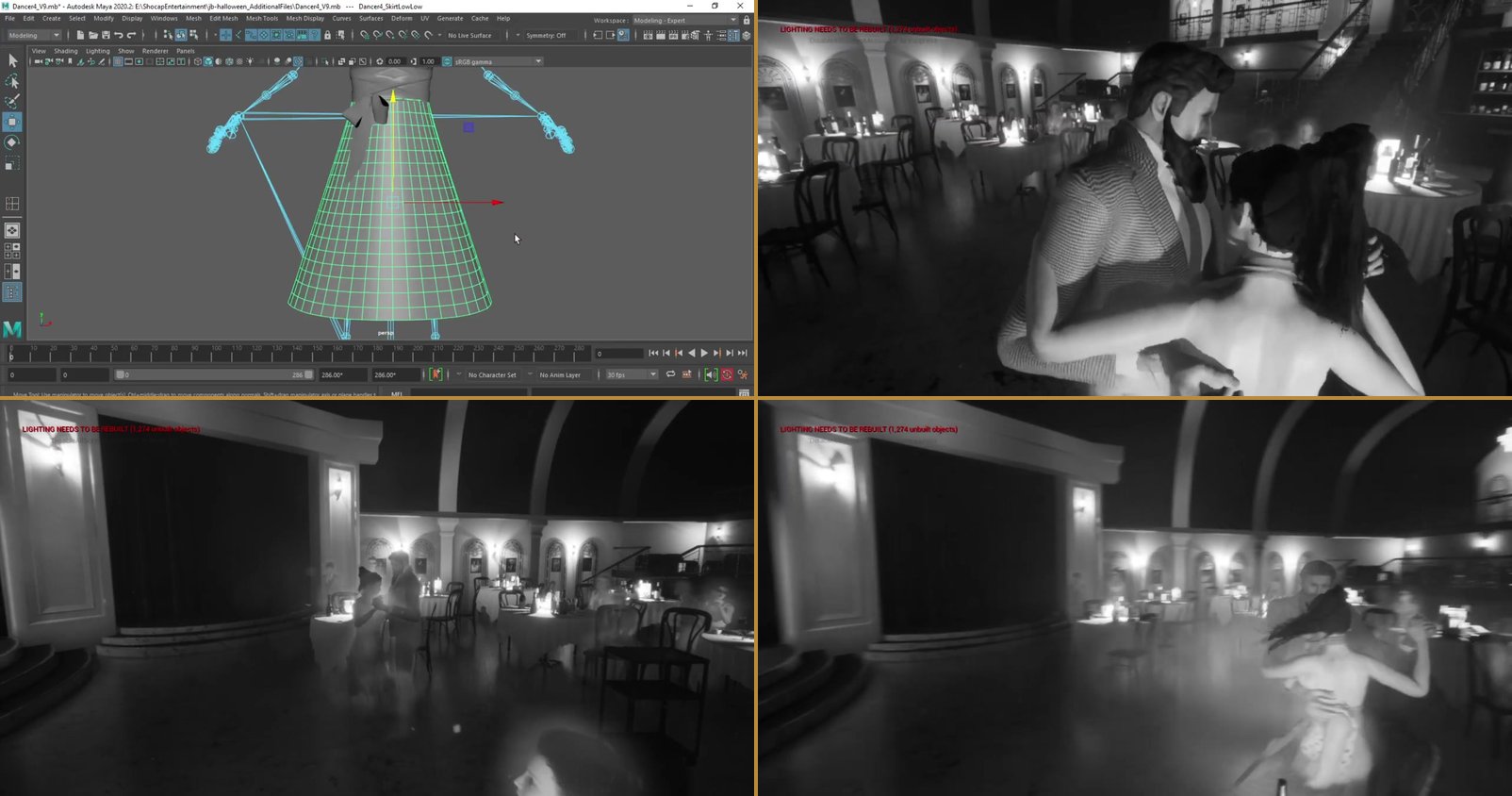
Cloth and hair simulations for every character. The Palomar was a 1940s supper club — period costuming sold the era. I set up physics-asset-based cloth on every virtual character that needed it (the dancing couple’s outfits, the band’s dinner jackets, patrons’ evening wear in the wider venue shots) and hair simulations on the same scope (period updos, slicked-back styles, plus the male dancer’s beard). Everything had to move with the head and the body without locking into a static helmet shape.
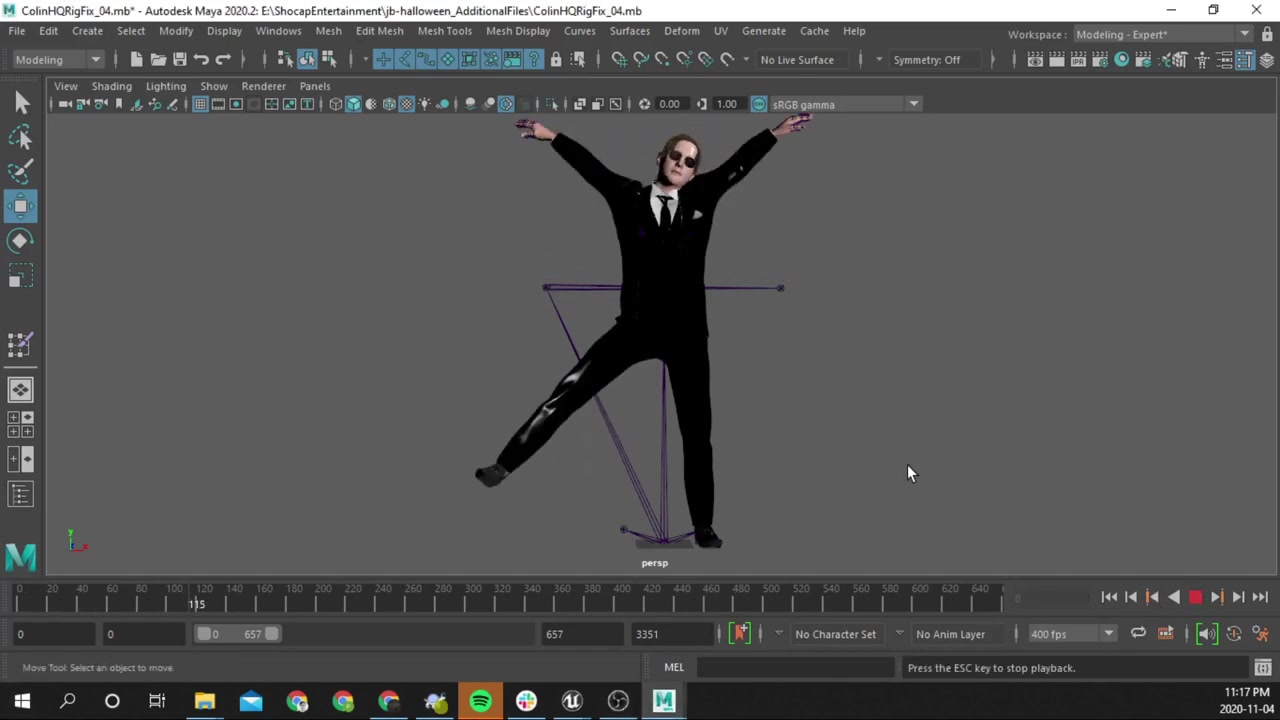
Skinning polish. Every 3D character was generated through Character Creator and Daz3D — fast for getting period-styled humans into Unreal, with the well-known weakness that default skin weights break down at the armpits, shoulders, and crotch the moment a performer extends a limb. I went through every character in Maya and polished the weights on those joints so the deformation held cleanly through the full jazz-night motion range.
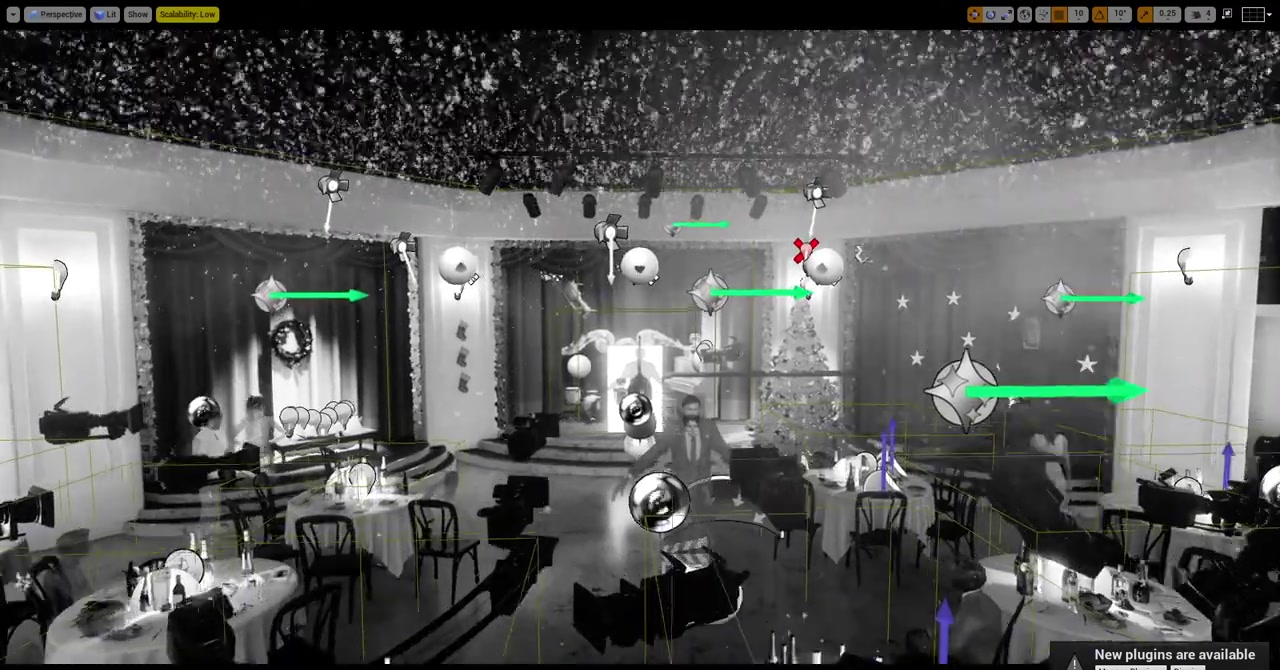
Snow particle FX (Christmas Special only). Drifting flakes through the wider venue shots and outside the windows, lit warmly so the snow caught the candlelight as it fell — the “1940s Vancouver December” feel matching the wreaths and the Christmas tree on stage.
The collaboration
The production was a Live Nation Canada + Shocap Entertainment partnership; the same pipeline carried We Won’t Forget the same month — real-time VFX, live motion capture, in-engine rendering.
The real Palomar stood at Burrard & Georgia from 1937 to 1955, hosting Nat King Cole, Billie Holiday, Peggy Lee, Louis Armstrong, Ella Fitzgerald, and The Ink Spots. Vancouver historian Aaron Chapman — author of Vancouver After Dark — gave the mid-show segment. Shocap’s art team recreated the period interior down to the menu cards and the labels on long-discontinued Canadian beer bottles.
The piece
The show streamed live on Friday, November 20, 2020 at 6pm PST, ticketed at $16 through jillbarber.com. The audience watched on whatever screen they had while the live performance was happening in real time at Animatrik’s motion-capture volume in Burnaby and at the green-screen room where Jill stood.
The full Shocap Jill Barber XR Performance playlist has the rest — promos, behind-the-scenes, the Aaron Chapman interview segment. Press coverage included CBC News, the Vancouver Is Awesome preview, the Stir Vancouver feature, and the Shocap Entertainment announcement.
What it became
The Palomar series ran alongside LiViCi’s We Won’t Forget on the same Shocap pipeline — both showed that cross-reality concerts could deliver an intimate venue experience when physical venues were closed.
As Jill Barber told Stir ahead of the show: “It just feels so exciting to be resurrecting an old venue, and resurrecting live music in a venue, when that’s being cut off for so many people.”